
Revision Bariatric Surgery
Sleeve Gastrectomy (SG) or Vertical Gastrectomy is purely restrictive and is recognized by the ASMBS as an approved procedure for weight loss.
In some cases, the SG is used as a “first-stage” procedure, followed by a second
procedure which would complete the gastric bypass.
- The procedure involves removing a large portion of the lower stomach and creating a long, tubular structure, which will limit food intake.
- The mechanisms of weight loss and improvement in co-morbidities seen after SG might be related to gastric restriction, hormonal changes related to gastric resection or gastric emptying, or some other unidentified factor or factors.
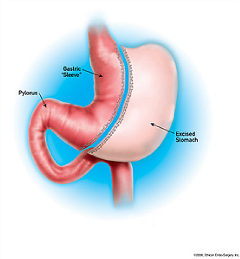
In comparison to gastric bypass, the sleeve gastrectomy does not predispose individuals to marginal ulcers, vitamin deficiencies, dumping syndrome, or malabsorption. Endoscopy can still be used as a diagnostic technique, as the remaining stomach and first portion of the intestine are still accessible.